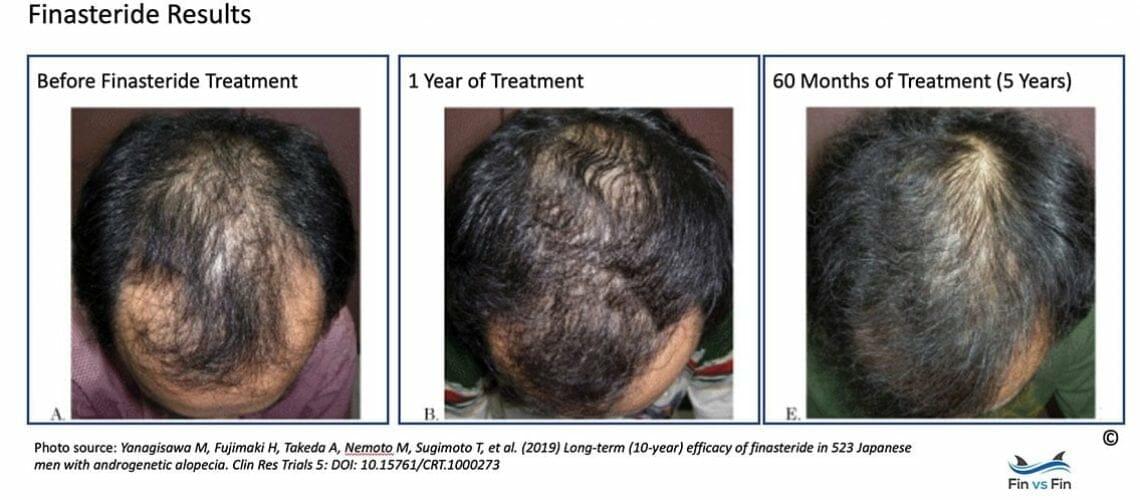
Male Pattern Baldness, also called androgenetic alopecia, is one of the most common and typical forms of hair loss. And it impacts more people than you’d think – believe it or not, 2 out of 3 men will experience some kind of MPB by the time they’re 35. Even with today’s improvements in science, there’s still no true “cure.” Thankfully for those of us who are starting to show signs of balding, there are now some legit, tried and tested treatments that can reduce the impact and even modestly improve a man’s hairline.
What causes hair loss for most men?
Genes are one of the most common root causes of hair loss. Lots of people have been told to blame their mother’s side of the family – but, more recent scientific studies are showing that it can just as likely be caused by your dad’s genetics. Dr. Dawn Davis of the Mayo Clinic says “patterns of baldness are inherited from many genes, which can come from both sides of the family. So, to assess your chances for hair loss, look at all relatives in your mother’s and father’s families.”
Variables beyond your genetics can additionally contribute to MPB. Chemical dyes as well as relaxers can aggravate balding, and “features” of a modern lifestyle like anxiety or a poor diet can also result in additional hair loss.
For an otherwise healthy male experiencing alopecia, the most likely cause is the hormone DHT (Dihydrotestosterone). DHT can cause some men’s follicles to shrink, and eventually die.
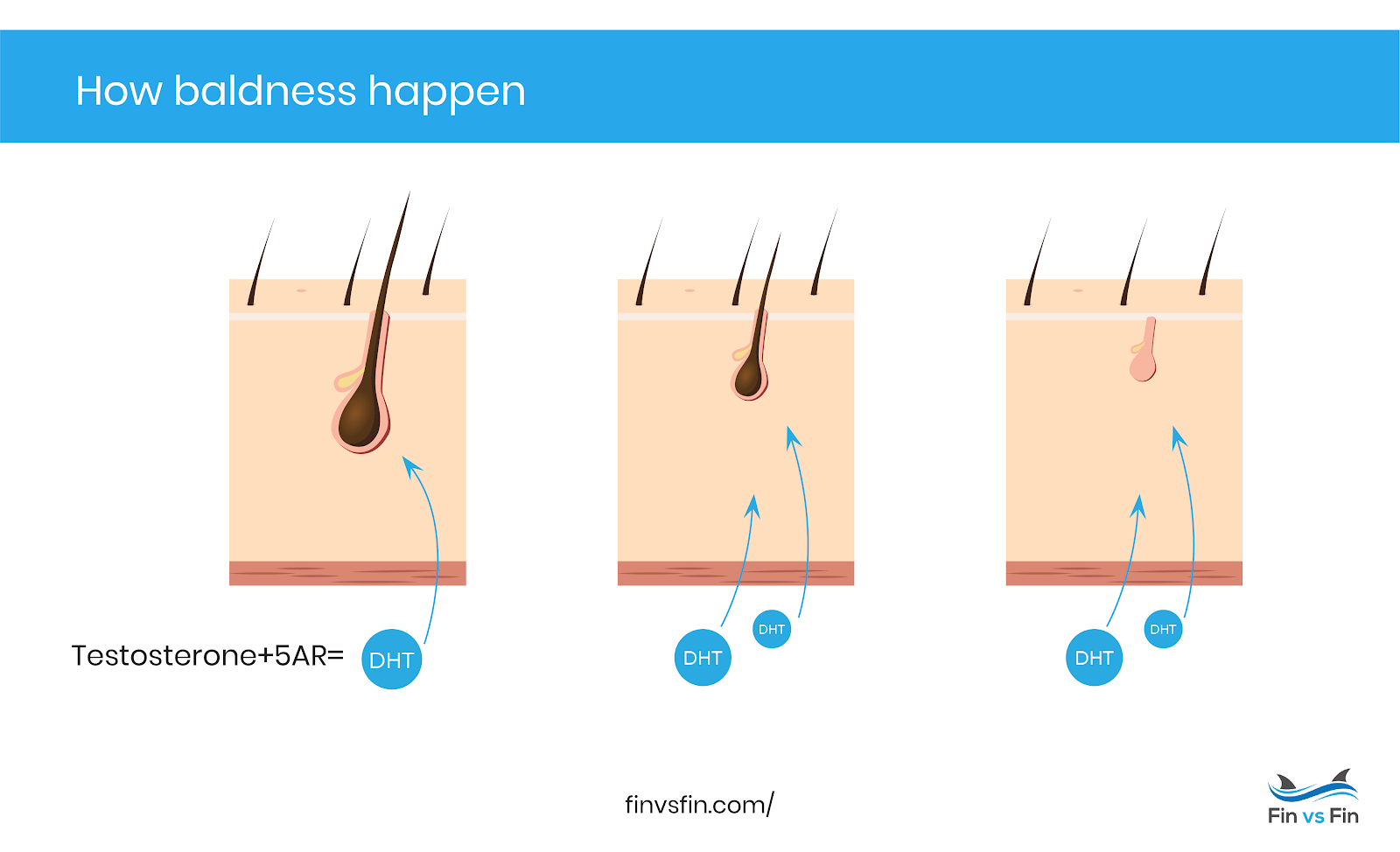
The best treatments on the market today either try to reduce DHT’s impact on the scalp, or try to bring additional nutrients to the follicles to make them stronger and larger.
What hair loss treatments are available?
If you see your doctor to ask about alopecia, you are likely to learn about the two most common drugs used to treat the condition. There are also some lifestyle changes that you can consider, which we’ll get to in a moment. However, the two main drugs – both FDA approved to treat MPB – are Finasteride and Minoxidil. Depending on your situation, your doctor may recommend one or both of these treatments.
While there are various other choices around that vary from hair transplantation to DHT-blocking shampoos to vitamins, a technique that consists of finasteride and minoxidil is one of the most reliable options if you wish to keep the hair you have today (not to mention it’s budget-friendly as well as backed by scientific research).
1. Minoxidil (Rogaine)
Non-prescription (nonprescription) minoxidil comes in fluid, foam as well as shampoos. To be most effective, apply the item to the scalp skin daily for women and twice daily for males. Many individuals like the foam applied when the hair is damp, although Rogaine, the leading brand of Minoxidil, suggests waiting until your hair is dry before applying.
Products with minoxidil have been shown in many, many clinical trials to help people regrow their hair or slow down the pace of hair loss or both. It can take two or more months before you’ll notice any improvement, and doctors typically recommend six months of therapy before you decide if it’s working or not.
Possible negative effects include scalp irritability and also undesirable hair growth on the adjacent skin of the face as well as hands. The most common side effect is going to be irritated skin, which can often be treated with an anti-dandruff shampoo.
2. Finasteride (Propecia)
This is a prescription medication for men, FDA approved to treat alopecia. It’s taken as a daily pill. Many guys taking finasteride experience a reduction in the rate of their balding, and also some might show new hair development. It usually takes at least a couple of months to really see if it’s working. Like Minoxidil, you’ll need to take Finasteride more or less forever to keep seeing the results.
It’s thought that this drug decreases DHT, making it less likely to reduce your hair follicles size.
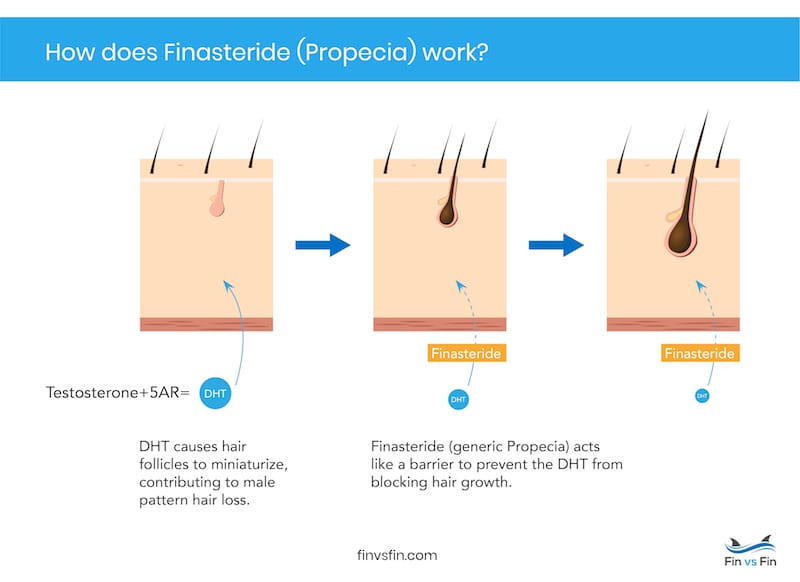
You can visit our Finasteride results page to see before and after photos of Finasteride.
Rare side effects of finasteride include diminished sex drive and sexual function as well as an increased threat of prostate cancer. Women should not use this drug nor should they touch the pills. There is also a new formulation of Fin available through the online hair loss providers – Topical Finasteride. While these formulations are not FDA approved (it’s only approved in the pill format), many studies do show that this medicine works – and also that it may have a lower instance of side effects. One of the leading providers of topical is Happy Head, which we’ve reviewed.
3. Combining Minoxidil and Finasteride
Treatments combining these two drugs have shown that up to 90% of men see positive results. In fact, the doctors at the biggest names in online telemedicine, Hims, Roman and Keeps, tend to recommend this combination treatment.
4. Dutasteride
This is another oral medication sometimes prescribed off-label for this condition. It’s not FDA approved, and may have some serious side effects.
5. Hair transplants
During a hair transplant treatment, a skin doctor or cosmetic surgeon surgically removes hair from a part of your scalp that has hair and then transplants it to a bald area. Each patch of hair has one to a number of hairs (micrografts and also minigrafts). In some cases a bigger strip of skin having numerous hair groupings is taken. This procedure doesn’t require a hospital stay. It is painful, so typically pain meds are given during the procedure. Possible dangers consist of blood loss, bruising, swelling as well as infection. You might require more than one surgery to obtain the impact you desire. Hereditary hair loss will eventually advance despite surgery. Go genetics! Surgical procedures to treat baldness are not typically covered by insurance coverage.
6. Laser treatment for hair growth
Supposedly the FDA has actually approved a low-level laser device as a therapy for genetic alopecia in males and females. A few, super small, researches have actually revealed that it boosts follicle thickness. More studies are required to reveal long-lasting effects. Laser treatment is believed to minimize the inflammation in follicles that keeps them from regrowing.
Beyond medical intervention, there are steps you can take to improve your hair loss.
Related reading: Roots by Genetic Arts Review: Can Genetic Testing Unlock Your Best Hair Growth Strategy?
What lifestyle adjustments can men make to reduce hair loss?
1. Quit smoking
If you’re a smoker, you’ve been told of all the negative effects smoking carries for your lungs. Yet did you understand that cigarette smoking could cause balding – and possible premature graying? Research has established that there’s a link between cigarette smoking and hair loss. Yet another reason to stop smoking.
2. Improve your diet
Your body, and your hair, need enough vitamins and minerals. A balanced diet can help you stay healthy and can help keep your hair healthy as well. In fact, some doctors suggest supplements like Biotin as a means to improve scalp health.
3. Scalp massage therapy
Not just do massages feel great, they can also, possibly, slow your balding. Massaging the scalp may give a boost to your follicles. A small study in Japan, for example, showed that men who got four minutes of a standardized scalp massage everyday, for 24 weeks, showed increased hair thickness. I don’t know about you, but I’m sure I’d be feeling better if I got a head massage everyday…
Methodology
We conduct extensive research to evaluate the pricing, effectiveness, accessibility, overall quality, and user experience of every telehealth service we review. This also includes examining and comparing each provider to comparable telemedicine alternatives. We also evaluate usability, treatments, prescription delivery time, and more to determine the best value for those seeking fast and reliable telehealth services.
Swipe or scroll to view all columns →
| Review Process | Key Metrics | Weighting |
|---|---|---|
| Sign up online | – ease of completing intake form – affordability – upfront commitment or subscription required? – money back guarantee or refund policy? | 0.5 |
| Virtual consult with provider / determine eligibility | – ease of getting appointment to determine eligibility – need to leave house for labs or other in-person care? | 1 |
| Shipping + unboxing | – shipping cost – time from order to treatment delivery – discreet packaging to maintain privacy | 0.5 |
| Test + journal for 1-3 months | – ease of application – transition into habitual use – taste / smell / feel / pain | 1.5 |
| Results after 3 months of use | – efficacy / results – lack of side effects – ease of refill / reordering – quality of ongoing clinical support – responsive customer support – willingness to recommend to a friend | 1.5 |