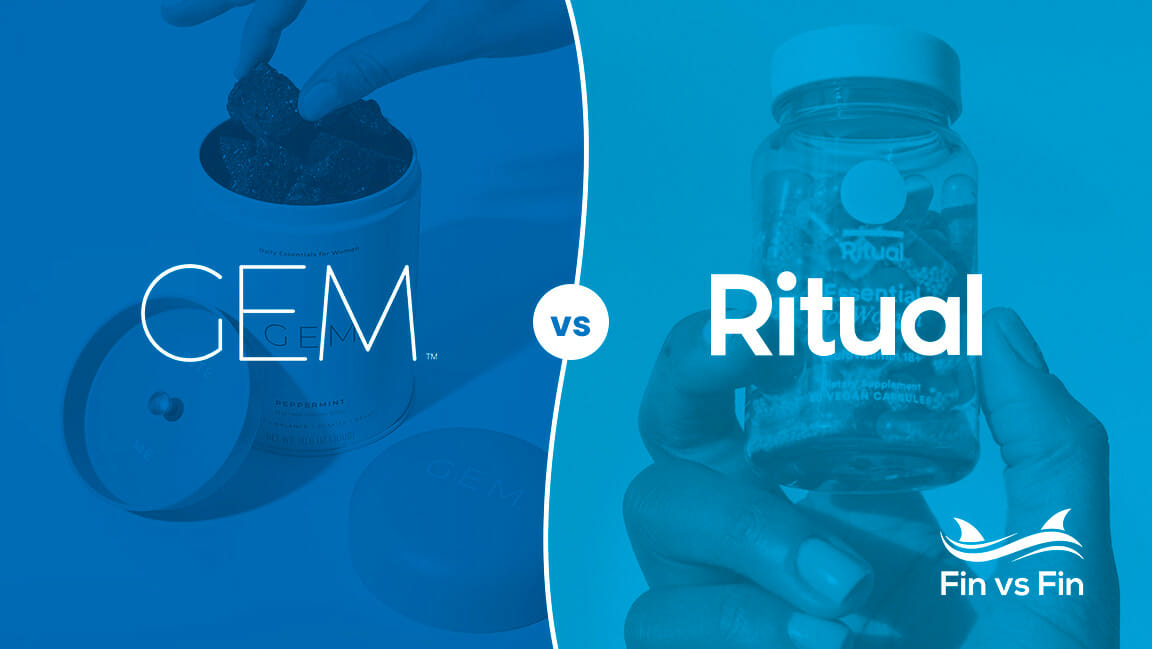
GEM vs Ritual: Which Daily Vitamin Is Best? |
 |
 |
|---|---|---|
| Product | Daily Essentials | Multivitamin 18+ Multivitamin 50+ Prenatal Multivitamin Postnatal Multivitamin Multivitamin for Her (teens) |
| Vitamin Form | Whole food bite | Slow-release capsule |
| Dose | One bite/day | Once a day (two capsules) |
| Subscription Price | $55/mo ($1.96/day) Get 15% off with code FINVSFIN15 | 18+: $33/mo 50+: $39/mo Prenatal: $39/mo Postnatal: $39/mo Teens for Her: $33/mo ($1.10-$1.30/day) |
| Free shipping? | ✅ | ✅ |
| Cancellation policy? | Cancel 24 hours before next billing date | Cancel any time |
| Offers refunds? | ❌ | 🟡 first bottle |
| Flavors? | Cacao Lemon raspberry Citrus ginger | None |
| Taste | Chewy, seedy, hints of coconut and date. Some reviews say there's an earthy or ocean flavor. | "Minty" from non-edible, scented bottle insert. |
| FDA-approved? | ✅ | ❌ |
| Vegan? | ✅ | ✅ |
| Soy-free? | ✅ | ✅ |
| Gluten-free? | ✅ | ✅ |
| Corn-free? | ✅ | ✅ |
| Synthetics, colorants, GMOs, or fillers? | ❌ | ❌ |
| Key Ingredients |
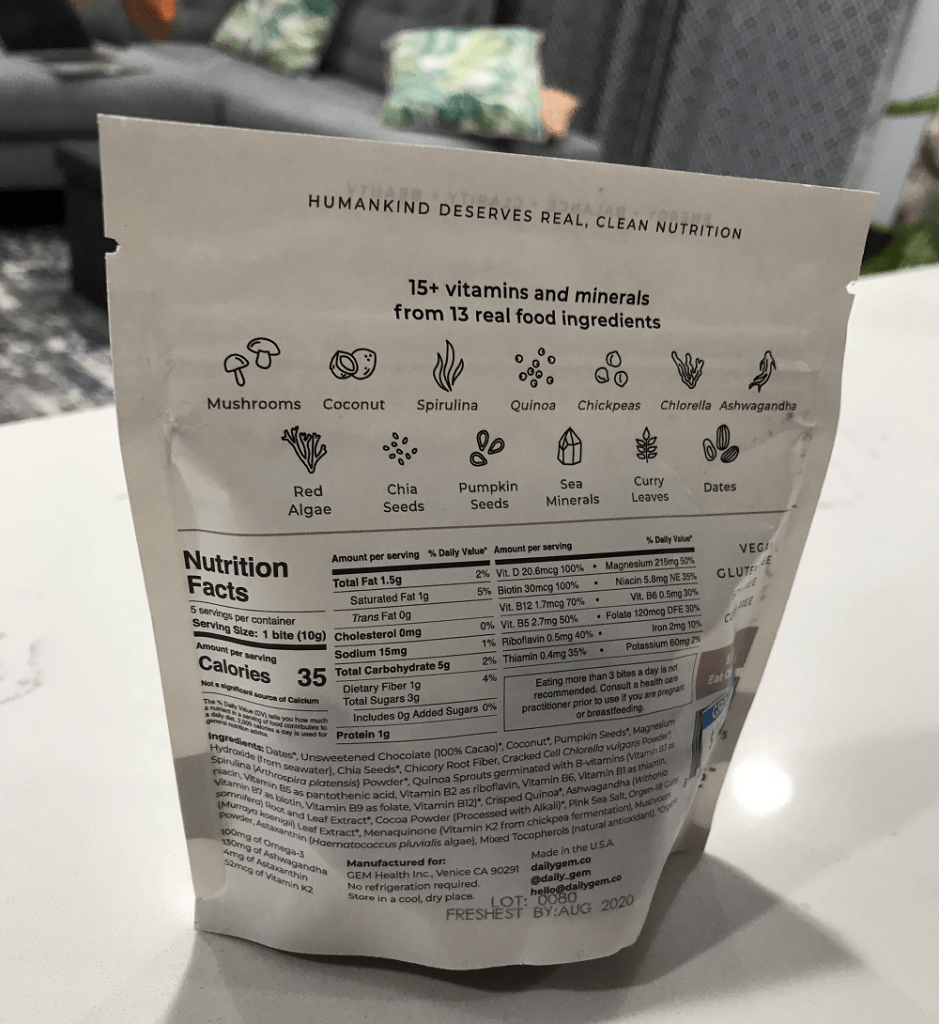
Cacao & Lemon Raspberry: Omega-3 (100mg) Ashwagandha (130mg) Astaxanthin (4mg) Vitamin K2 (52mcg)Citrus Ginger: Curcumin (250mg) BetaVia Complete (383mg) AFU Probiotics (2 billion) |
All multivitamins contain: Folate Omega-3 DHA Vitamin B12 Vitamin D Vitamin K2 Boron Vitamin E Magnesium18+: Also contains ironPrenatal: Also contains choline, iodine, biotin, ironPostnatal: Also contains vitamin A, vitamin C, zinc, biotin, choline, iodine, ironTeens: Also contains vitamin A, iron, zinc |
| Sustainable packaging? | ✅ Contains components that are plant-based resources, biodegradable, reusable, and compostable | ✅ Bottles are 100% recycled sources, mailers are ~83% recycled |
| App? | ❌ | ✅ |
| Other Products Available? | Sleep Essentials Calm Essentials | Gut Health Protein Pregnancy For Men |
| Website | GEM Vitamins | Ritual |
Vitamins 101: an industry resistant to change
According to a 2017 study published by the Journal of Nutrition, more than half of all Americans take a vitamin supplement everyday, with 29% taking four (!) or more. That’s a lot of pills consumed every, single, day, and thus it’s unsurprising the vitamin and dietary supplement industry brings in a whopping $40 billion each year. And with estimates of between 50k – 80k products in the U.S.market at any given time, the FDA is simply not equipped to regulate it. As a result, the contents of most dietary supplements remain as lawless as the wild west. Approximately 70 percent of supplements have some degree of substitution — that is, the product doesn’t contain what it says on the label– and around one third contain contaminants or filler. These include bulking agents, binders, coatings, preservatives, emulsifiers, artificial colors and flavors, sweeteners, allergens like corn and soy, gelatin and whey (made from GMO animal products), anti-cakers, carriers, glazes, and excipients. Yucky, right? And also dangerous. Some contaminants have even been found to pose serious health risks to consumers, so we always recommend speaking with your doctor before introducing any new supplements to your routine, especially any you plan to take daily.Why are healthier, all-natural or organic vitamins emerging now?
 Vegan supplements have traditionally been rare, and aside from a handful of boutique brands in health food stores, they weren’t widely available or adopted. Most vitamin capsules are made with gelatin (derived from animal bones), and some essential vitamins, like D3, come from lanolin, a substance derived from sheep’s wool.
Similarly, most Omega-3s are derived from fish oil, which often contains mercury. Are consumers simply unaware of their exposure, or why haven’t natural alternatives become more popular?
Unfortunately the pharmaceutical industry who profits most from mass-produced supplements is an incredibly powerful force without any incentive to innovate.
Especially since other deep-pocketed corporations like Monsanto have also helped create the nutritional deficiencies that fuel demand for cheap, mass-produced supplements. These dynamics have made changes within the industry slow and mostly non-existent, as they fund studies to “prove” the efficacy of daily supplements and perpetuate the standard of secrecy surrounding ingredients.
“Before the 1930’s, we got our vitamins from the ground, not the lab. The sad reality is that processed foods and the vitamin industry are dependent on the other’s existence. Vitamins enabled our processed foods, while processed foods gave a reason for synthetic vitamins to even exist. Without synthetic vitamins, scientists have calculated that more than 90% of us would be deficient in at least one nutrient if not way more. We need vitamins,” says Sara Cullen, Founder of GEM.
Both GEM and Ritual, respectively, were born from their founders’ need for better answers in the vitamin aisle. Recognizing that most contain superfluous, GMO, non-vegan and allergen-ridden ingredients, Sara Cullen of GEM, and Katerina Schneider of Ritual took matters into their own hands, creating vitamins that deliver only what your body needs, and none of what it doesn’t.
Vegan supplements have traditionally been rare, and aside from a handful of boutique brands in health food stores, they weren’t widely available or adopted. Most vitamin capsules are made with gelatin (derived from animal bones), and some essential vitamins, like D3, come from lanolin, a substance derived from sheep’s wool.
Similarly, most Omega-3s are derived from fish oil, which often contains mercury. Are consumers simply unaware of their exposure, or why haven’t natural alternatives become more popular?
Unfortunately the pharmaceutical industry who profits most from mass-produced supplements is an incredibly powerful force without any incentive to innovate.
Especially since other deep-pocketed corporations like Monsanto have also helped create the nutritional deficiencies that fuel demand for cheap, mass-produced supplements. These dynamics have made changes within the industry slow and mostly non-existent, as they fund studies to “prove” the efficacy of daily supplements and perpetuate the standard of secrecy surrounding ingredients.
“Before the 1930’s, we got our vitamins from the ground, not the lab. The sad reality is that processed foods and the vitamin industry are dependent on the other’s existence. Vitamins enabled our processed foods, while processed foods gave a reason for synthetic vitamins to even exist. Without synthetic vitamins, scientists have calculated that more than 90% of us would be deficient in at least one nutrient if not way more. We need vitamins,” says Sara Cullen, Founder of GEM.
Both GEM and Ritual, respectively, were born from their founders’ need for better answers in the vitamin aisle. Recognizing that most contain superfluous, GMO, non-vegan and allergen-ridden ingredients, Sara Cullen of GEM, and Katerina Schneider of Ritual took matters into their own hands, creating vitamins that deliver only what your body needs, and none of what it doesn’t.
The new school of personalized vitamins: GEM vs Ritual and others
In recent years, brands like care/of, Baze, hundred, and Persona Nutrition have innovated on the daily multivitamin, providing subscription-based models for tailored routines based on a survey or blood test. Likewise, other brands like Vitafive, Moon Juice and Four Sigmatic have become more clever at breaking from the traditional pill format by creating new products with a wider range of individualized ingredients, like ashwagandha, reishi, moringa, ginseng, turmeric, or chaga. GEM and Ritual are different in that they are providing a minimalist’s multivitamin for women that aim to provide just the essential vitamins and minerals that are lacking from most women’s diets. Although the two brands offer very different products, both companies are female-focused, developed by women, and are boasting true transparency of ingredients, sourcing, and purpose, which is truly unique in the vitamin and supplement industry. Both companies share the sources of their ingredients and take transparency to a new level. For every single ingredient, Ritual has a library of information on its benefits, the source it was derived from, supporting studies, an interactive map view of all its factories, and even interviews with the manufacturers. They even encourage consumer engagement with their researchers, offering a direct email for an exchange of clinical studies. Yucky, right? And also dangerous. Some contaminants have even been found to pose serious health risks to consumers, so we always recommend speaking with your doctor before introducing any new supplements to your routine, especially any you plan to take daily. GEM provides similarly detailed information on each ingredient included in their daily supplements, citing academic studies and describing the science behind each of their all-natural ingredients and how they work to benefit your health.
All-natural supplements with style: How form affects bioavailability
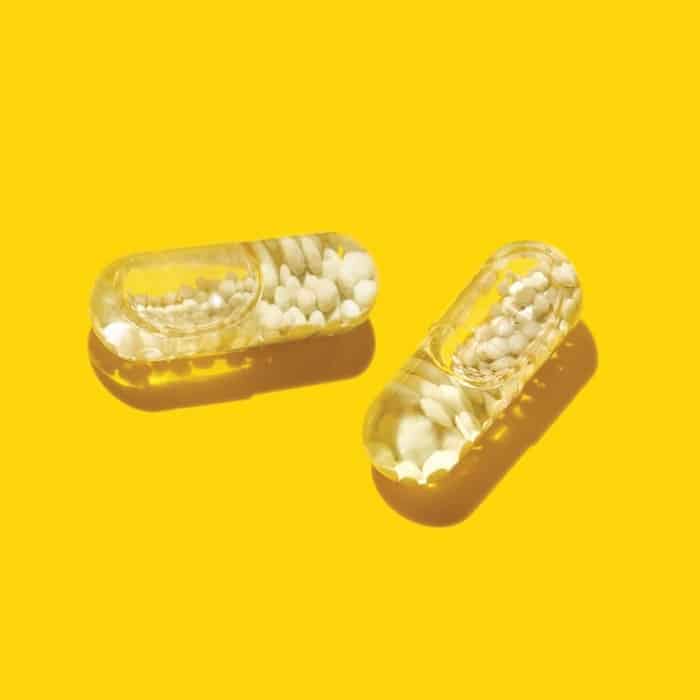
You’ll notice that vitamins from GEM and Ritual both look unique, too. GEM developed their product based on several studies that suggest longevity can be expanded by getting nutrients and vitamins from real foods, rather than supplements. There are a multitude of reasons for this, including the fast dissolution of capsules, the inability for the body to absorb many vitamins developed in a lab, and the body’s natural purging of unnecessary ingredients. To cite two examples among hundreds: a third of people in the U.S. cannot digest lab-produced folic acid due to a genetic mutation, and most calcium doesn’t get absorbed because of a lack in Vitamin K, Vitamin D, Boron, and Magnesium. Thus most daily supplements with those two nutrients aren’t helping folks overcome deficiencies.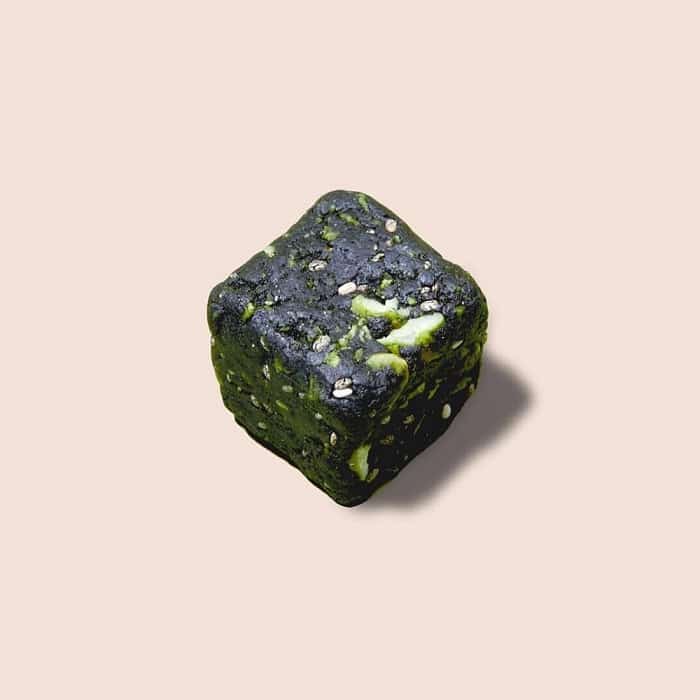
Sustainability: Healthier for you and the planet

Ritual vs GEM: Which women’s multivitamin is best for you?
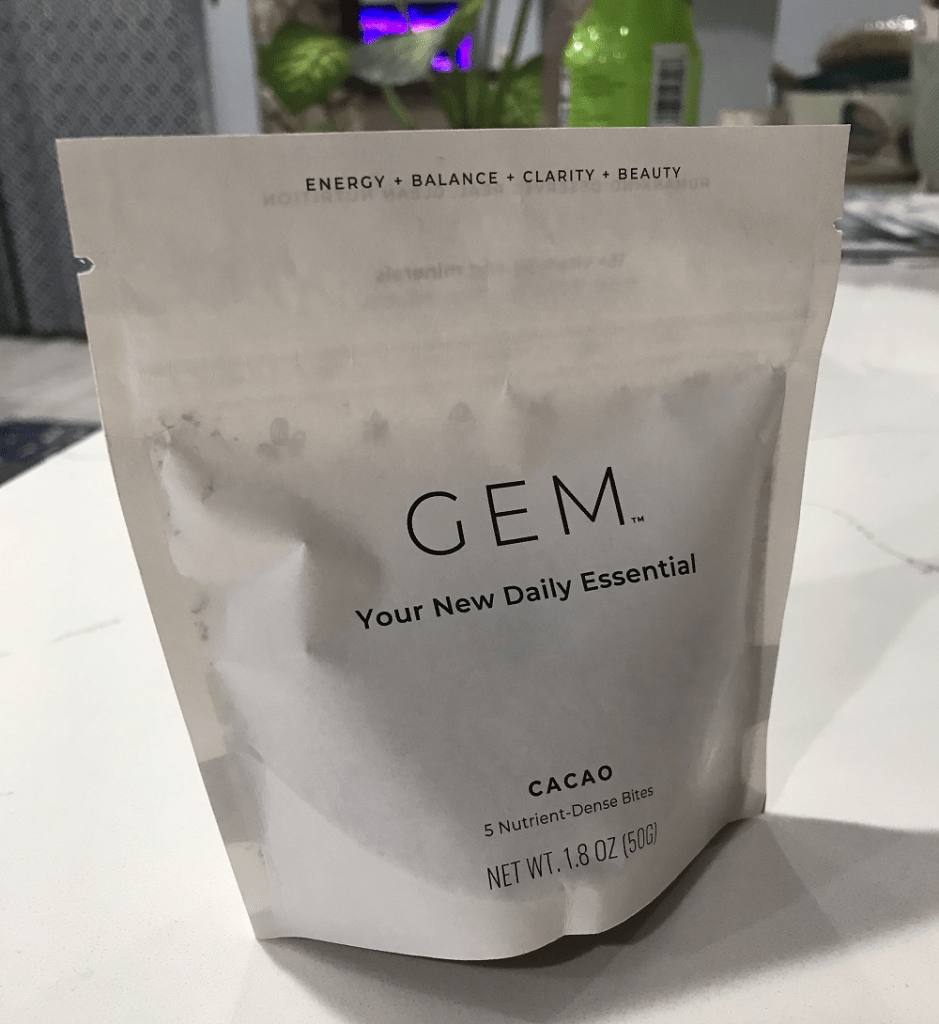
While both claim full transparency with sourcing ingredients, and both provide bioavailable (slow-release, better absorption) vitamins or nutrients, GEM departs from the typical women’s multivitamin by its whole food form. Form is therefore one of the biggest differentiating factors, so if you’re you’ve been looking for a non-pill daily vitamin, GEM is your best bet. For many, eating a GEM is like a snack-breakfast to start the day with, without the painful gulp/choking hazard of traditional vitamin intake. The taste reviews seem mixed, however, with some claiming it to taste “almost like dessert,” and others unable to get past its earthy, or even oceanic tone. Honestly, the only way to tell is to taste it yourself. Ritual also promises nausea-free absorption, and their reward system is supported by the Apple Watch App that gamifies your vitamin intake by reminding you to take your vitamins, tracking your usage, and motivating you with updates from the broader community of other Ritual users. The app also integrates with Apple Health, so that users can track their nutrition alongside physical activity.
The Verdict: Should you try GEM or Ritual all-natural daily vitamins?
The vitamin and supplement industry has been operating in the shade for a long time, with limited regulation, fueled by marketing strategies set forth by mega-corporations who control so many of the pharmaceutical, food and produce, and everyday household products in our lives. GEM and Ritual are challenging the status quo by providing products with limited, green and ethically-sourced ingredients, giving women only the nutrients that are lacking from their diets, and nothing more. Furthermore, these companies are operating with a philosophy of transparency and sustainability that rises high above the competition — hats off! 👏 This is important because the majority of Americans lack vital nutrients in their everyday lives, and women are especially at risk for anemia, calcium deficiencies, and mental/emotional stress due to the inability to absorb essential vitamins like Vitamin D. Not all vitamins and supplements are created equal. So many on the market are saturated with unnecessary ingredients, as well as the wrong form of ingredients that challenge absorption levels. Once again, these standards are being challenged by the new school of supplements like GEM and Ritual. Regardless of which you choose, we recommend you check with your doctor before beginning any new health routine, and of course, multivitamins should not be seen as replacements for a healthy diet or other medications. GEM is ideal for who want to... Personally, I loved GEM’s vitamin bite — both conceptually as an alternative to pills and in terms of taste — but I realize it’s not for everyone.
Try GEM →
Ritual is likely to yield the best results
If you’re simply looking for a more natural daily vitamin, made of ingredients you can trust, Ritual is the industry leader. If you struggle to swallow pills, give GEM a shot (and use discount code FINVSFIN15 for 15% off). If you want to join a large community of health-focused women trying to take their nutrition to the next level, go with Ritual. Either way, you’ll be much better off than folks taking mass-produced supplements or no vitamins at all!
Try Ritual →
Methodology
We conduct extensive research to evaluate the pricing, effectiveness, accessibility, overall quality, and user experience of every telehealth service we review. This also includes examining and comparing each provider to comparable telemedicine alternatives. We also evaluate usability, treatments, prescription delivery time, and more to determine the best value for those seeking fast and reliable telehealth services. | Review Process | Key Metrics | Weighting |
|---|---|---|
| Sign up online | – ease to complete intake form – affordability – upfront commitment or subscription required? – money back guarantee or refund policy? | 0.5 |
| Vitual consult with provider / determine eligibility | – ease to get appointment to determine eligibility – need to leave house for labs or other in-person care? | 1 |
| Shipping + unboxing | – shipping cost – time from order to treatment delivery – discreet packaging to maintain privacy | 0.5 |
| Test + journal for 1-3 months | – ease of application – transition into habitual use – taste / smell / feel / pain | 1.5 |
| Results after 3 months of use | – efficacy / results – lack of side effects – ease of refill / reordering – quality of ongoing clinical support – responsive customer support – willingness to recommend to a friend | 1.5 |