With an average yearly salary of $55,672 in the U.S., health coaching is a worthwhile career for those interested in the health and wellness space who want to focus on supporting others. Health coaches in Delaware, Alaska, and Washington DC, as well as in major cities like New York City and San Francisco, tend to be paid the highest salaries, far surpassing the yearly national average salary, with some individuals making upwards of $200,000.
However, many factors can determine your earning potential as a health coach, including a higher education degree, certification courses, and specialties, such as coaching for families, older individuals, and pregnant clients. Additionally, health coaches who offer in-person coaching can often charge more than fully remote coaches.
In this article, we’ll explore the average health coach salary for all 50 states in the U.S., as well as the various factors to consider before pursuing a health coaching career.

What Is the Average Rate for a Health Coach?
The average rate for a health coach will vary from city to city and state to state. However, the national average is between $45,753 and $61,838 per year. As of October 2023, the average yearly salary for a health and wellness coach in the U.S. is $55,672, and the average hourly rate is $27.
Health Coach Salary Per Hour and Yearly
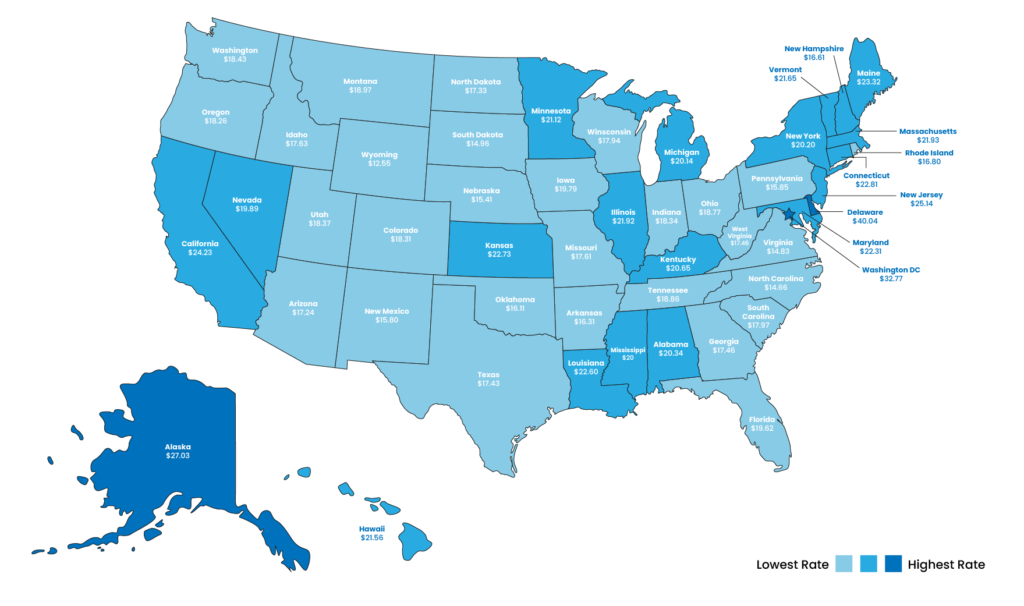
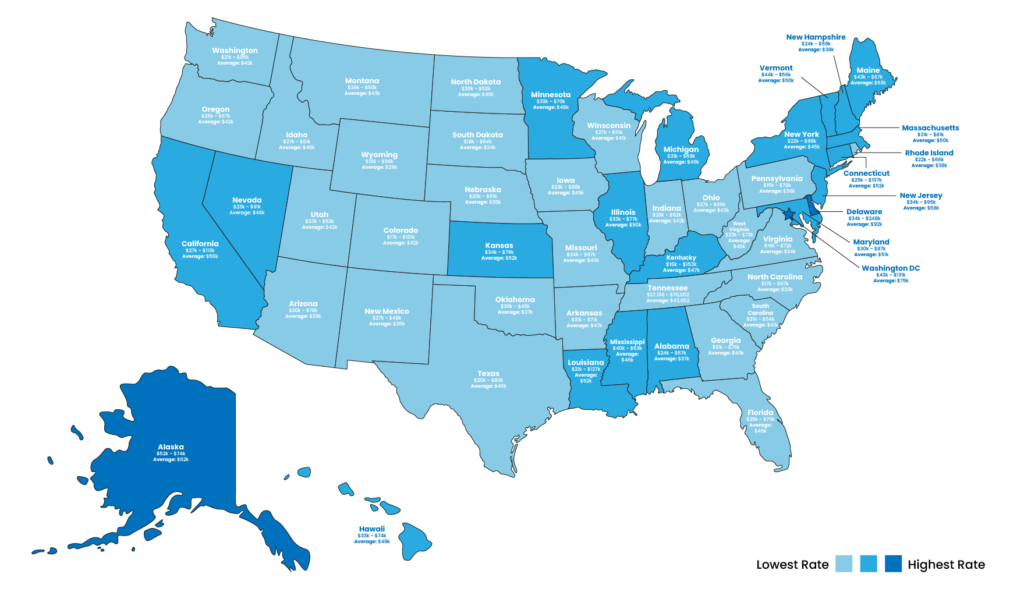
We directly compared the hourly and yearly health coach salaries of each state to help you determine whether health coaching may be an appropriate career for you.
Health Coach Salary Per Hour
Hourly health coach salaries can range from about $12 per hour to upwards of $40 per hour, depending on location.
Sarah Boos / Fin vs Fin
Average Yearly Health Coach Salary and Salary Range
Yearly health coach salaries can range from about $16k to over $200k, depending on location.
Sarah Boos / Fin vs Fin
Remote Health Coach Salary
The average remote health coach salary in the U.S. is $45,401, with a range of $39,543 to $54,530. This is more than $10k less than the national average salary for non-remote health coaches.
With these numbers in mind, health coaches can generally charge more when they offer in-person sessions. However, offering multiple coaching formats, including in-person, remote, and hybrid, can help you earn more by appealing to a broader range of clients.
Other ways to improve your earning potential as a health coach may include:
- Specializing in multiple facets of health and wellness, such as nutrition, exercise, mindfulness, fitness, stress management, weight loss, sleep hygiene, and more
- Providing multiple health services, such as meal planning and personalized exercise regimens
- Obtaining professional certifications
Where Do Health Coaches Make the Most Money?
Health coaches make the most money in Delaware, with an average yearly salary of $92,669. This is followed by Washington, DC at $75,845 and Alaska at $62,555.
Cities in the U.S. with the highest-paid health coaches include:
- Wilmington, Delaware with an average yearly salary of $96,531
- New York, New York with an average yearly salary of $70,034
- San Francisco, California with an average yearly salary of $66,883
- Denver, Colorado with an average yearly salary of $48,368
- Cincinnati, Ohio with an average yearly salary of $47,915
- Dallas, Texas with an average yearly salary of $45,248
Where do health coaches make the least money?
The states with the lowest-paid health coaches are Wyoming, North Carolina, and Virginia.
Is Becoming a Certified Health Coach Worth It?
There are several factors to consider when deciding whether becoming a certified health coach is worth it.
These factors may include:
- Personal interest and passion: Health coaches help clients improve their physical and mental wellness through behavioral and lifestyle changes. A large part of a health coach’s role is to motivate and inspire their clients. To do so, a passion for health is crucial. Many health coaches have a background in healthcare, but a genuine interest in wellness and strong interpersonal skills are enough to get started.
- Day-to-day responsibilities: Consider if the day-to-day experience of being a health coach is aligned with your aspirations. Health coaches spend their days coaching clients in person or via video call, voice call, or instant messaging. They may also evaluate client progress and develop treatment programs. Health coaches must dedicate time to administrative tasks, including bookkeeping, marketing, and client acquisition.
- Career trajectory: It takes time to develop a loyal client base as a health coach. Many coaches receive new clients from referrals and stellar reviews, both of which may take years to develop. It’s important to consider that growing your career (and salary) as a health coach is a long-term effort.
- Start-up costs: The cost of a certification program and funds to support you while you land your first clients are essential to becoming a certified health coach. Consider saving enough to cover these costs before beginning your health coach career.
A career as a certified health coach may not be the best for you if:
- You don’t have a passion for health and wellness.
- You don’t have the time to invest in growing your health coaching business.
- You don’t have an alternate source of income to support the early stages of your health coaching career.
Related reading: Coach vs. Therapist - What’s the Difference?
Are Health Coaches in High Demand?
According to the U.S. Bureau of Labor Statistics, 6,600 openings for health education specialists are projected every year. This comes with an increasing general awareness of health and wellness, as well as a rising prevalence of chronic medical conditions. With these facts in mind, the demand for health coaches is continuing to grow.
Health Coach Certification Programs
While health coaches aren’t required to obtain any licensure or certifications, many health coach certification programs exist. These programs can expand your knowledge and help you acquire clients. It’s important to consider the cost of completing a certification program before pursuing a career in health coaching.
National Society of Health Coaches (NSHC) Health Coach Certification
-
- Cost: $875
- Duration: 85 hours
- Format: Online
- Requirements: Eligible medical credentials
- Benefits: Self-paced, based on evidence-based health coaching (EBHC)
Dr. Sears Wellness Institute Health Coach Certification
-
- Cost: $945 to $1,645
- Duration: 6 to 12 weeks
- Format: Online
- Requirements: Diploma or equivalent
- Benefits: Allows you to specialize in families, adults and older adults, and/or pregnancy, provides ICF, NBHWC, and CDR accreditations
Emory University Health and Wellness Coaching Certificate
-
- Cost: $4,995
- Duration: 4 to 5 months
- Format: Live and self-guided online learning
- Requirements: Bachelor’s degree
- Benefits: Reputable academic certification, detailed modules
American Council on Exercise (ACE) Health Coach Certification
-
- Cost: $779 to $1,379
- Duration: 3 to 6 months
- Format: Online
- Requirements: Recent NCCA-accredited certificate in fitness or a related field, associate’s degree, at least two years of work experience, a completed health coach program approved by the NBHWC
- Benefits: Self-paced
Mayo Clinic Wellness Coach Training Course
-
- Cost: $4,900
- Duration: 12 weeks
- Format: Online
- Requirements: Bachelor’s or Associate's degree, trainees must complete 50 hours of coaching within two years of taking the course to become fully certified
- Benefits: Accredited by the National Board for Health and Wellness Coaching, nationally known and respected, ideal for those seeking comprehensive training in health and wellness
Health coach certification programs involve learning about various facets of health coaching (exercise, nutrition, stress management) and passing an exam. Some programs also require practice coaching sessions.
Related reading: Topics to Be Coached On - Discovering What People Want From Coaching
Summary
Health coaching can be a lucrative, fulfilling career for individuals with a passion for wellness and helping others. While the average yearly salary is just over $55,000, hourly and yearly health coach salaries can vary depending on several factors, including where you live, whether you offer remote and/or in-person services, and if you have any specialties.
If you’re interested in exploring health coaching, begin by finding a certification program that matches your qualifications and budget. This will serve as an excellent starting point from which you can seek out clients and expand your business.
Frequently Asked Questions (FAQs)
How do I start a career as a health coach?
To start a career as a health coach, we recommend completing a health coach certification course.
Can you call yourself a health coach without certification?
Yes. Health coaches don’t legally need any certifications.
How do I sell myself as a health coach?
To sell yourself as a health coach, determine what sets you apart (such as a specialty, experience, education, etc.) and market it through social media, in-person networking, business cards, and a dedicated website. You may also consider joining a health coaching site to further promote your services.
What is the best degree for a health coach?
The best degree for a health coach is a bachelor’s or higher education degree in a health-related field.