It’s a simple fact that everyone loses hair as they age, and it’s genetics that determine just how much you’ll lose. If you happen to be within the 66% of men who have a noticeable loss by age 35, you’ve probably heard of Finasteride already.
Sold under the brand names Proscar™ and Propecia™, Finasteride is one of the most effective and highly advertised hair loss prevention remedies on the market. In fact, it is one of only two FDA approved drugs that target common male-pattern baldness (the other is Minoxidil, and we’ll touch on that drug’s results as well).
Even though Finasteride is only available with a prescription, there are several easy to use online pharmacies that offer help discreetly, affordably and painlessly. Blink, Keeps, Roman, REX MD, Lemonaid Health all offer Fin at competitive prices.
But before we discuss the best ways to get the cheapest finasteride online, you may be wondering: how well does it actually work? This article will run through the basic science behind hair loss, and round up the research on Finasteride’s results, and show you actual photos of before and after results from medical research, so you can make an informed decision on whether it’s right for you.
How do hair loss medications like Fin work?
To understand how Fin works, we first need to understand the causes of hair loss.
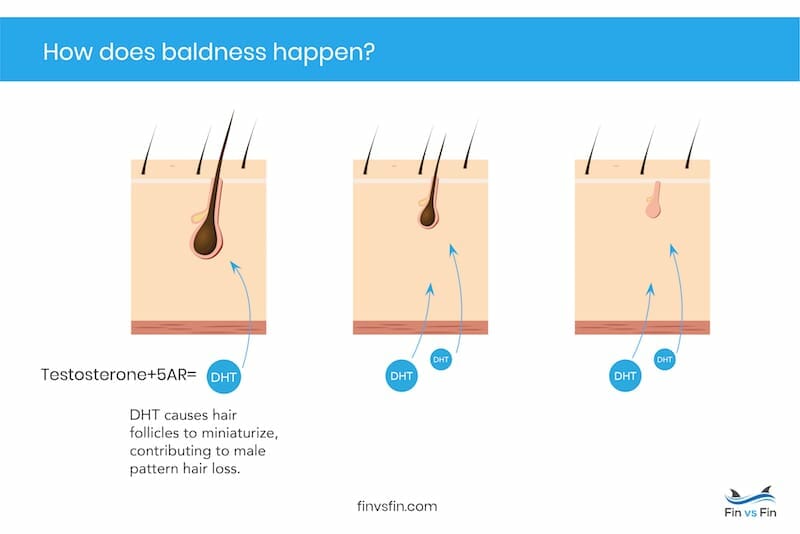
In the male body, testosterone regularly gets converted into a variety of hormones to help your body run. One of these hormones that it is converted into is called Dihydrotestosterone, or DHT. DHT is normally made in order to develop the male sex organs during puberty, as well as maintain the prostate and seminal vesicles post puberty.
For some people, this DHT conversion carries on throughout life with no effect on hair follicles. But others, according to studies, have a genetic sensitivity to DHT, making their follicles more sensitive to it. For these folks, DHT interacts with hair follicles in a way that makes them shrink.
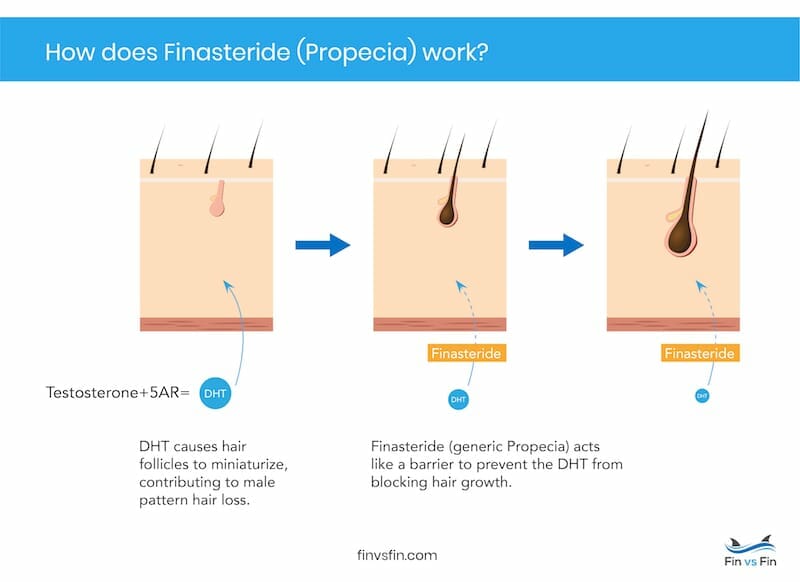
Enter Finasteride! Fin blocks DHT, by inhibiting the production of an enzyme, 5-alpha-reductase, or 5AR. Fin blocks 5AR by about 70%, in both the blood serum and at the scalp (source: Reviews in Urology medical journal). The idea behind the medicine is that it blocks enough DHT to help keep your hair follicles healthier while letting your body have enough to maintain your prostate and other essential bits for solid reproductive health. This image shows how finasteride gets its results:
If you’re looking for a professional opinion before choosing to move forward with a specific treatment, consulting a dermatologist is a great first step.
Finasteride Clinical Trials: What does the research say about Finasteride results?
The medical community has been studying Finasteride for decades. Below is an overview of the research over the years on the results from many clinical studies of the medicine:
Swipe or scroll to view all columns →
| Year of Study | Group Size | Dose | Duration | Finasteride Results |
| 1997 | 166 men, aged 18-40 | 1 mg daily | 1 year | 70% saw no additional hair loss, measured by count65% reported slowed hair loss, by self reporting 52% improved by clinician’s assessment 37% improved by photographic assessment |
| 1998 | 1553 men, 18-40 years | 1 mg daily | 1 year | In a one-inch area study on the scalp, an average of 107 new hairs after 1 year was observed; in the same area, an average of 138 new hairs after 2 years was observed. |
| 2011 | 118 men, 18-40 | 1 mg daily | 10 years | Better results were observed in men over 30. If you don’t have results after year one, they are not likely to improve. In 21% of cases, using beyond 5 years improved results. |
| 2003 | 424 men, 41-60 years old | 1 mg daily | 1 year | Improvements were seen after 6 months of treatment |
| 2012 | 3177 men, 18-40 | 1 mg daily | 3 years | 11.1% were greatly improved; 36.5% were moderately improved; 39.5% were slightly improved. |
Finasteride Results: Before and After Photos
We’ve compiled before and after images from clinical trials so you can see some Finasteride results. We decided to use medical studies instead of the typical marketing photos so you can see how it really works.
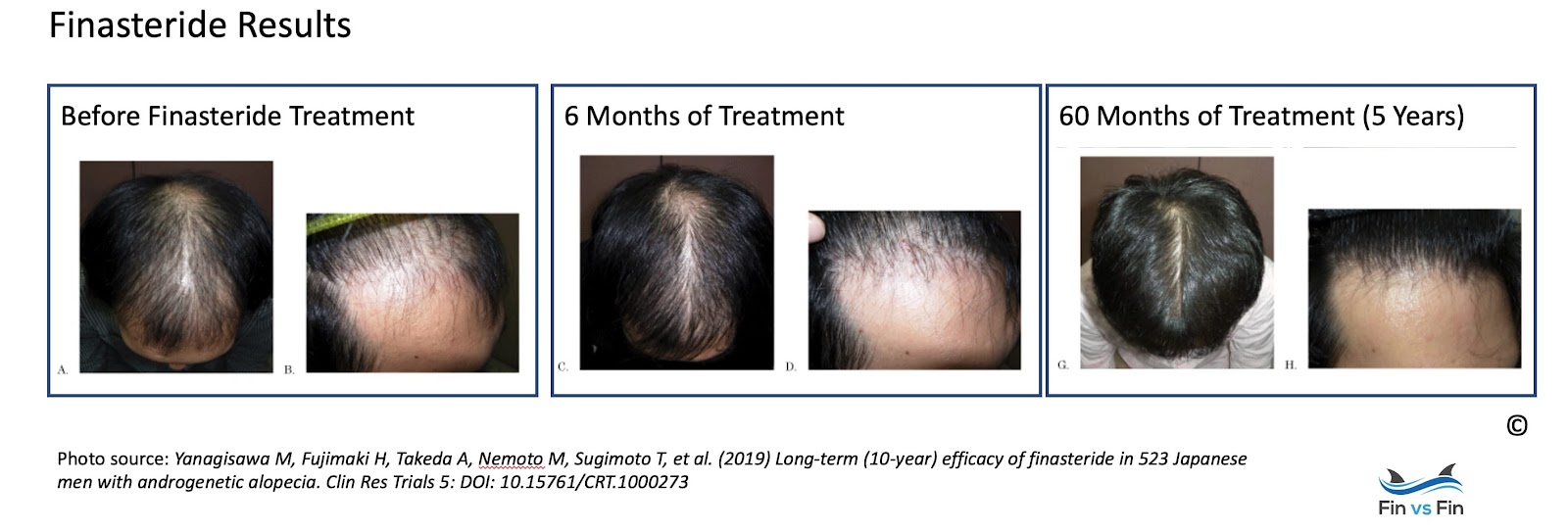
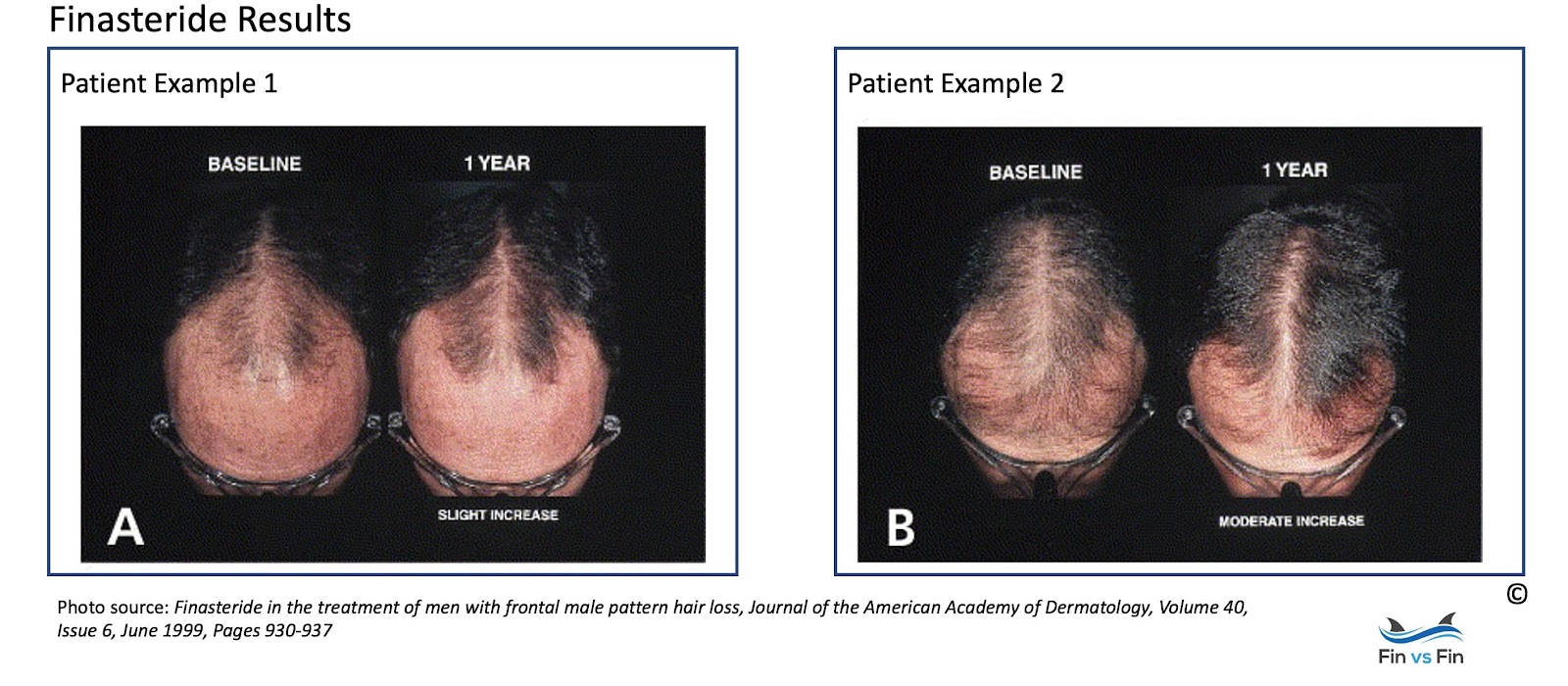
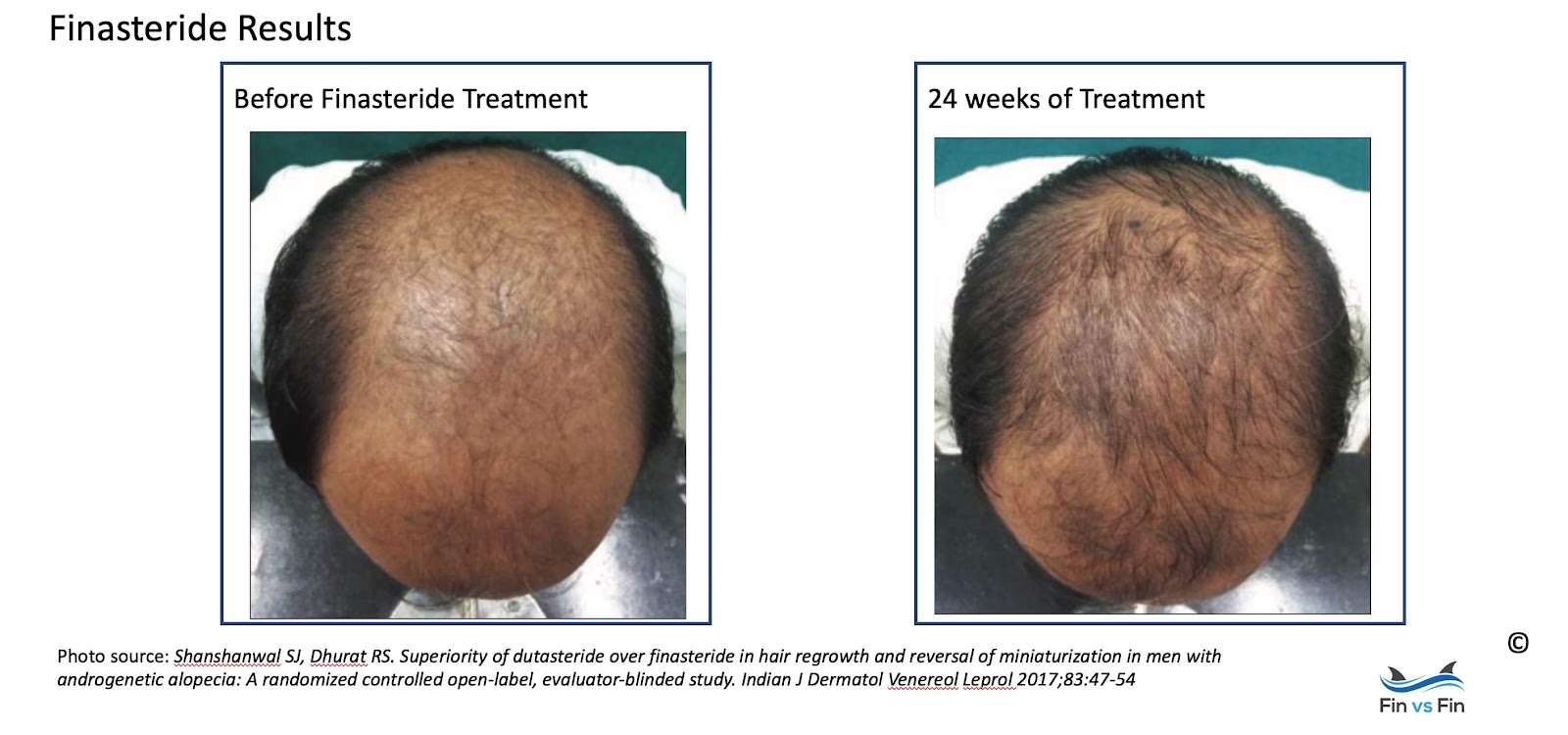
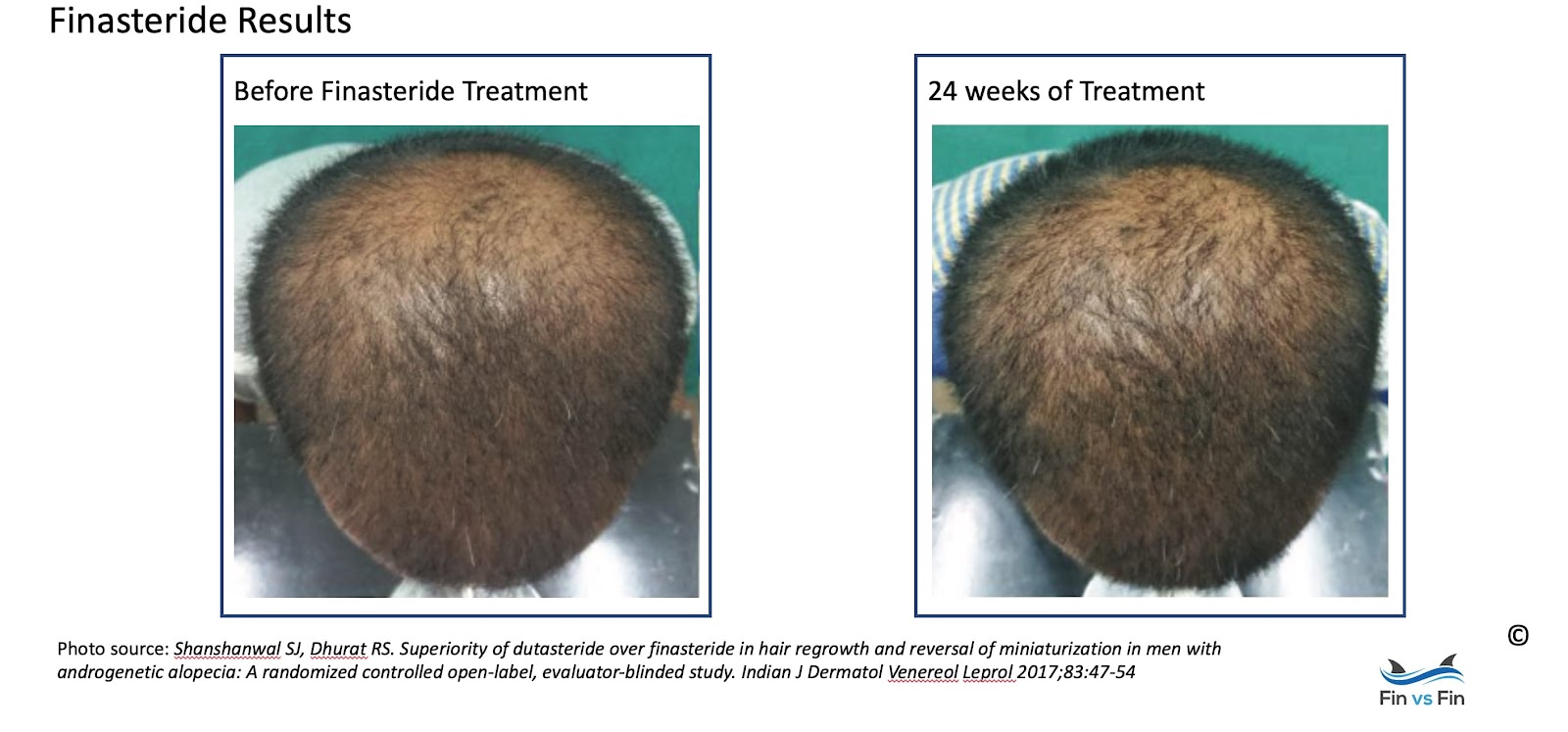
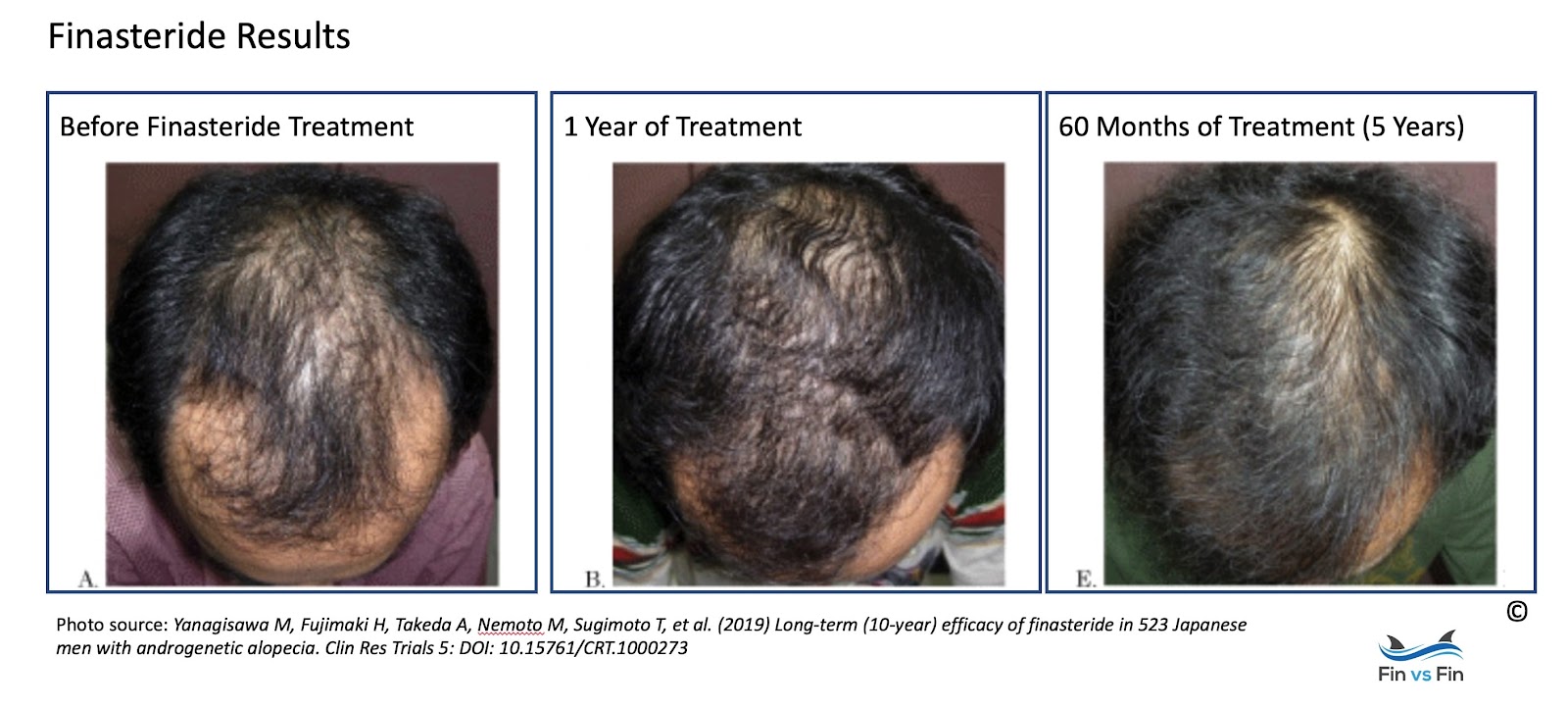
As you can see, there are some pretty striking before and after results – and some pretty modest ones as well. A very important thing to realize is that this isn’t a wonder drug. If you are cue ball bald or if you are experiencing really advanced male pattern baldness you are not likely to suddenly have hair like you did when you were a kid. And the research strongly suggests that men who see the best results are the ones who start taking Finasteride when they first realize that they are experiencing hair loss.
If you are ready to try Finasteride, you can get a free doctor’s visit and prescription, plus 50% off, at Keeps right now.

What do Finasteride meta-analyses say about its effectiveness?
So what’s the TLDR? If the table above was a dizzying amount of information, there is an easy way to get a summary. Researchers do what’s called a meta-analysis to sum up lots of studies, where they systematically gather all the data on a drug, and run statistics to make an overarching statement on whether it works. They throw out all the studies with bias, like those sponsored by drug companies, and with mistakes in how they were conducted.
Here is what the meta analyses have to say on Fin:
- One review, in 2010, combined several studies totaling in 3927 participants, showed a significant increase in efficacy for Finasteride versus the placebo.
- Another review done in 2019 showed that Finasteride is effective, but a similar 5AR inhibitor, Dutasteride is slightly more effective.
Does Finasteride dosage matter?
The recommended dosage of Finasteride is 1 mg. But research shows that any dosage over 0.2 mg per day was effective. Here is what one study found:
| Fin Dosage | Effectiveness |
| 0.2 mg | Minimal |
| 1 mg | High |
| 5 mg | High |
However, there was no reason found to increase to 5 mg, since its effects were equal to 1 mg. Plus, the side effects occurred less often at the 1 mg dose. So, 1 mg remains the optimal dose.
Is Finasteride safe?
FDA regards Finasteride as generally safe. Women of child bearing age shouldn’t take it, and, like most pharmaceuticals, a few adverse effects have been recorded. The good news is that the drug has been widely studied and used by hundreds of thousands of men, so these side effects are well understood – and known to be very infrequent.
What are the potential side effects?
The most commonly reported side effects from finasteride include:
- Depression
- Erectile dysfunction
- Decreased libido due to the blocking of dihydrotestosterone.
One large review study of over 18,000 patients found the following data:
- No direct link to depression
- No increase in prostate cancer
- Anywhere between 3 and 16 percent experience sexual side effects
One new item to note – topical formulations of this medicine are now becoming available off-label in the US; visit our Best Topical Finasteride article to learn more. So now that we know how Finasteride works, let’s take a look at the differences between Fin and some other hair loss prevention treatments.
How does Finasteride compare to other hair loss meds?
As we mentioned earlier, there are only two FDA-approved drugs that you can take for male pattern baldness: Finasteride and Minoxidil. There is another drug that has been approved in some countries (but not the USA), Dutasteride, that can fight baldness and also works in the same way, by blocking 5AR. However, since Dutasteride isn’t approved in the US for this condition, we won’t get too into it in this review.
Unlike Fin, the other FDA-approved drug, Minoxidil, is not taken by mouth – instead, it is applied directly to your scalp.
Finasteride vs Minoxidil vs Dutasteride
When you compare the results and other important factors of Finasteride, Minoxidil and Dutasteride, we see that Fin is generally the best, oral medicine to fight hair loss. This table compares Finasteride vs Minoxidil vs Dutasteride – the percentages are our attempt to summarize the clinical research.
Swipe or scroll to view all columns →
| Alopecia Drug | Finasteride | Minoxidil | Dutasteride |
| FDA approved for hair loss treatment | Yes | Yes | No |
| Prescription Required | Yes | No | Yes |
| Mechanism | 5AR inhibitor | Vasodilator | 5AR inhibitor |
| Percent of Men Who See Improvement | ~80% | 40% – 60% | Not well published |
Since Dutasteride isn’t FDA approved in the US, the most common “combo therapy” is Minoxidil and Fin. The results do show that combining these two medicines creates the best outcomes. For example, one study compared Minoxidil and Fin together with Minoxidil alone, and found that the combination provides the best results (there are quite a few of these studies, which is why many doctors and the online hair loss providers often recommend combining the two drugs). Here are the fine details of the study we mentioned:
Swipe or scroll to view all columns →
| Hair Loss Treatment | Dose | Study length | Results |
| Finasteride | Oral, 1 mg/day | 1 year | Some improvement |
| Finasteride plus Minoxidil | Oral fin 1 mg/day with topical 2% minoxidil solution | Highest improvement | |
| Ketoconazole shampoo | 2% Ketoconazole | Some improvement | |
| Finasteride plus Ketoconazole shampoo | Oral fin 1 mg/day with topical 2% Ketoconazole shampoo | Moderate improvement |
Khandpur, Sujay et. al. Comparative Efficacy of Various Treatment Regimens for Androgenetic Alopecia in Men. July 2014. The Journal of Dermatology, Vol. 29, Issue 8.
What’s the best way to buy Fin online?
The first rule of buying hair loss meds online: Ignore the plethora of websites claiming to sell without a prescription! These can be knockoffs, unapproved supplements, and overall just a bad idea. Get the real drug – it’s easy enough to get a prescription from online players like Roman, Hims and Keeps, so just do the right thing and get the real drug. Oh, and the doctor visits are usually free online, so you don’t have to worry about co-pays, insurance or any of that junk.
Another way these legit providers help save you money is by using generic Finasteride instead of the brand name Propecia. This means you can save hundreds of dollars a year on drug costs – and if you include the no-cost doctor visit and prescription, then you really can save a ton going online vs. using the traditional medical system. And most of them offer free trials and introductory offers!
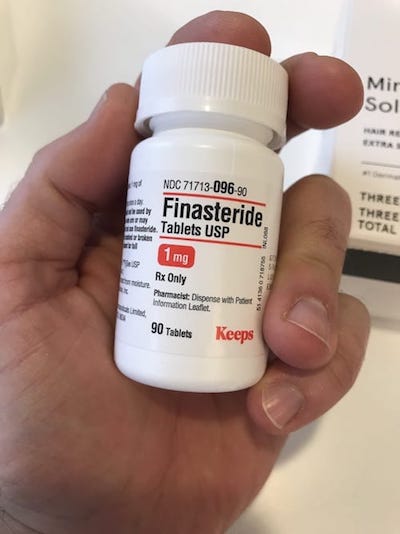
For customers in most states, we recommend Keeps. They sell Finasteride bundled with Minoxidil and the doctor’s visit is free. Keeps provides a convenient online customer experience, sends their finasteride discreetly, and has an introductory offer for half off the prescription.
Try Keeps now and get 50% off!
What is the monthly cost for Finasteride?
Swipe or scroll to view all columns →
Online retailer |  Hims Hims |  Roman Roman |  Keeps Keeps |
|---|---|---|---|
| Prescription required? | Yes | Yes | Yes |
| Online doctor’s fee? | Free | Free | Free |
| Price per mg | $0.95 | $0.67 | $0.83 |
| Price per month | $28.50 per month (first month free) | $20 per month (first month free) | $25 per month (get 50% off!) |
We have previously compared these three online finasteride providers in depth — check it out here. And because the laws about prescribing Fin are different in every state, you may also want to have a peek at this article to double check the exact price.
https://www.youtube.com/watch?v=g-pOCDOOtx4
The Verdict: Does Finasteride work for men’s hair loss?
Finasteride is ideal for those who want to...
In the end, the research clearly shows that Finasteride is effective in preventing hair loss for most men and in some cases bringing back hair in areas that were previously bald.
As usual, the best product for you will depend on your personal situation. That includes your lifestyle and the degree of hair loss you are experiencing. If the situation is severe and you want to go full press on it, you may want to add Minoxidil topical to your routine in addition to a Finasteride oral dose.
We hope this article helps you with your decision making! Please don’t hesitate to reach out if you have questions, or drop us a comment below.
Methodology
We conduct extensive research to evaluate the pricing, effectiveness, accessibility, overall quality, and user experience of every telehealth service we review. This also includes examining and comparing each provider to comparable telemedicine alternatives. We also evaluate usability, treatments, prescription delivery time, and more to determine the best value for those seeking fast and reliable telehealth services.
Swipe or scroll to view all columns →
| Review Process | Key Metrics | Weighting |
|---|---|---|
| Sign up online | – ease of completing intake form – affordability – upfront commitment or subscription required? – money back guarantee or refund policy? | 0.5 |
| Virtual consult with provider / determine eligibility | – ease of getting appointment to determine eligibility – need to leave house for labs or other in-person care? | 1 |
| Shipping + unboxing | – shipping cost – time from order to treatment delivery – discreet packaging to maintain privacy | 0.5 |
| Test + journal for 1-3 months | – ease of application – transition into habitual use – taste / smell / feel / pain | 1.5 |
| Results after 3 months of use | – efficacy / results – lack of side effects – ease of refill / reordering – quality of ongoing clinical support – responsive customer support – willingness to recommend to a friend | 1.5 |